Field Notes: Entry #2 – Loch Ness Monster (The Water Horse)

There are lakes that feel older than memory.
Loch Ness is one of them.
In my field notes, the Loch Ness Monster is one of the most enduring water-based legends in modern folklore. Often described as a large, long-necked creature moving through the deep, dark waters of Loch Ness in Scotland, the story has persisted for centuries, carried through sightings, photographs, and generations of local storytelling.
But beneath the modern name “Nessie” lies an older thread of folklore that runs even deeper.
Table of Contents
Field Observations & Water Encounters
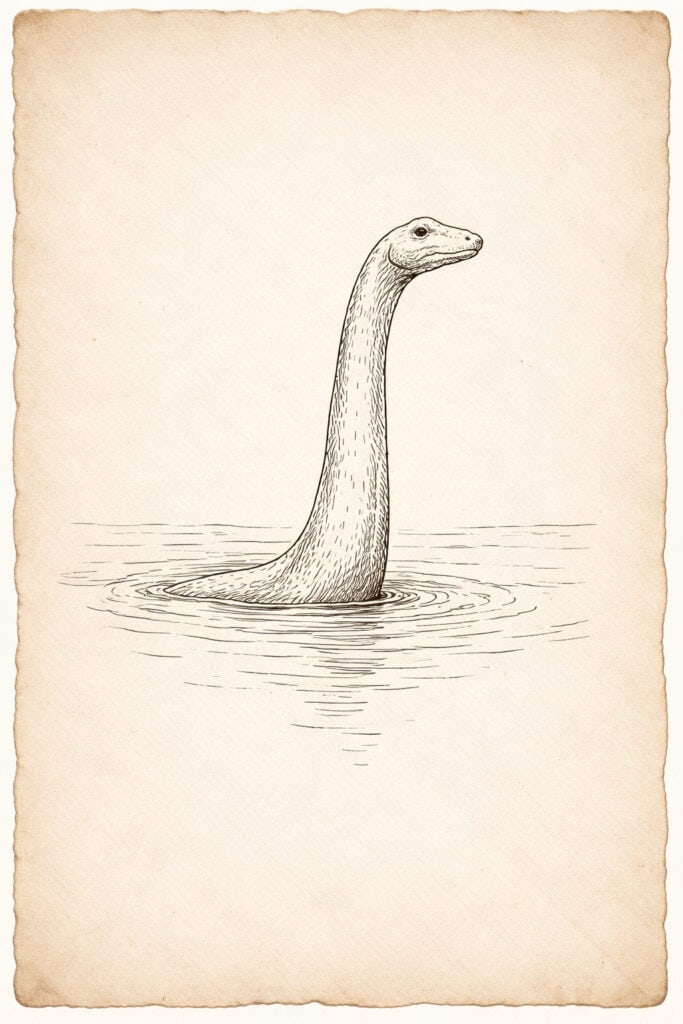
Reports of Nessie commonly describe:
- A long neck or hump-like forms breaking the water’s surface
- Sudden movement beneath still water
- Ripples or disturbances with no visible cause
- Brief sightings that disappear quickly into depth
Loch Ness itself plays a major role in the legend. Its waters are dark, cold, and incredibly deep, with limited visibility, creating a natural environment where mystery feels almost inevitable.
Over time, sightings and interpretations have shifted, but the legend remains active in both local storytelling and global curiosity.
The Water Horse Mythology (Kelpie Connection)
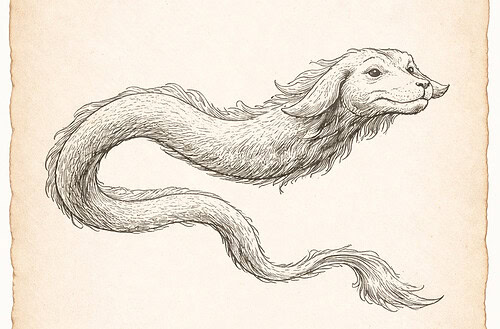
Long before “Nessie” became a modern cryptid, Scottish folklore spoke of the each-uisge (often called the water horse) and the kelpie.
These were not gentle lake creatures in the original myth.
They were described as:
- Shape-shifting water spirits or beasts
- Beings that could appear as horses near water
- Creatures that lured travelers into deep waters
- Symbols of danger hidden beneath beauty and calm surfaces
In some versions of the legend, the water horse was said to live in lochs and rivers, emerging briefly before returning to the depths.
It is from this older mythology that many modern interpretations of the Loch Ness Monster may have evolved, or at least been shaped culturally over time.
What I find fascinating is how the story transformed:
from a warning in folklore…
to a modern mystery…
to something people now search for with cameras and sonar.
Pop Culture Imprint
Like many cryptids, Nessie has become part of global storytelling.
From documentaries to children’s books to playful illustrations, the Loch Ness Monster has taken on a gentler cultural identity than many waterhorse myths originally held.
She is often portrayed not as something dangerous, but as:
- elusive
- ancient
- peaceful
- deeply connected to her environment
That shift in tone says just as much about us as storytellers as it does about the creature itself.
The Loch Ness Monster has also taken on a rich life in modern storytelling, where she shifts between mystery, danger, and something unexpectedly tender.
One film that stands out in that cultural landscape is The Water Horse: Legend of the Deep. Watching it recently with my family gave me a different way of imagining Nessie, not just as a distant cryptid legend, but as something more intimate and emotional.
In the story, the creature is named Crusoe by a young boy who discovers it near the loch. The film presents an idea that only one of these creatures exists at a time, and that they reproduce in a solitary, almost mythic cycle, laying an egg before the end of their life. This concept appears to be a narrative invention for the film rather than a direct part of traditional Scottish folklore, but it adds a powerful emotional layer to the legend.
There is also a contrast in how the creature is portrayed: older stories and folklore often lean into fear, tales of beings in deep water that could drag travelers beneath the surface. In contrast, The Water Horse reframes that idea into something far gentler, showing a creature capable of fear, curiosity, and deep connection with a human child.
It almost feels like a water-bound version of a “wild companion” story, something like Free Willy, where the central theme becomes release rather than captivity. The creature is not something to possess or control, but something to understand and ultimately set free.
What I found most interesting is how this version doesn’t erase the mystery, it softens it. It allows Nessie to exist not just as a cryptid of speculation, but as a being capable of relationship, emotion, and story.
And in that way, the legend continues to evolve, not just through sightings or folklore, but through the stories we keep choosing to tell about her.
Folklore Theories & Interpretations
Over time, the Loch Ness Monster has been interpreted in many ways:
- misidentified aquatic animals
- geological or environmental phenomena
- lingering cultural folklore from waterhorse mythology
- or speculative ideas involving unexplained deep-water activity
Some modern interpretations even connect Nessie to broader “lake mystery” patterns seen in other cultures, where deep bodies of water are often associated with hidden or spiritual significance.
Whether viewed as myth, misinterpretation, or mystery, the consistency of the story across centuries keeps it anchored in cultural memory.
Artistic Interpretation
In my watercolor field studies, I don’t approach Nessie as something to define.
Instead, I see her as the quiet life of deep water, the unseen movement beneath still surfaces.
She becomes a symbol of depth, mystery, and the unseen layers of creation. Not something to capture, but something to observe from the shoreline.
Some things in nature are not meant to rise fully into view.
They are meant to move beneath it.
Field Notes Classification
Cryptids – Hidden creatures said to exist in the natural world
The Loch Ness Monster belongs to the category of cryptids: beings described as physical and natural, yet remaining unverified and elusive.
Closely tied to this is older waterhorse folklore (kelpies and each-uisge), which forms an important mythological root in the region’s storytelling tradition.
Reflection
Water has always held a different kind of mystery than land.
It hides. It reflects. It distorts.
And perhaps that is why stories like Nessie endure, they live in the space between what we see and what we imagine beneath the surface.
Whether she is creature, myth, or memory, the Loch Ness Monster remains one of the most enduring figures in water folklore, not because she has been proven, but because she continues to be sensed.
And sometimes, sensing is enough to keep a story alive.
Associated Artwork
(This section will feature my watercolor ACEO interpretation of the Loch Ness Monster as part of the Field Notes collection.)
Field Note Status
Ongoing observation. Water-based reports, interpretations, and cultural stories continue to evolve.
Related Field Notes
Other entries that echo similar patterns or observations:
- Bigfoot – a land-based counterpart in cryptid sightings and folklore
- Will-o’-the-Wisp – a mysterious presence often associated with water and liminal spaces
- Dragon – a mythic creature sometimes connected to ancient interpretations of large unknown beings
Further Reading & Field Resources
Stories of Nessie often sit at the intersection of folklore and local history, especially in Scottish tradition.
As an Amazon Associate, I may earn from qualifying purchases.
The Loch Ness Monster The Evidence
Legends of Loch Ness: Folklore and the Monster that Captivates

Raeanna
Raeanna Tilly is a watercolor artist, writer, gardener, and storyteller cultivating a life of faith, beauty, and hope at the forest’s edge in North Carolina with her family. Through her art and words, she invites others to slow down, look a little closer, and discover that hope can take root in the most ordinary places.