Field Notes: Entry #4 – Dragon

Some creatures feel like they were never meant to be hidden.
Only remembered.
In my field notes, dragons are among the oldest and most widespread beings in global mythology. Unlike cryptids that linger on the edge of modern sightings, dragons belong to story traditions that stretch across cultures and centuries, appearing in vastly different forms, yet carrying a familiar sense of awe wherever they are found.
They are not just creatures of legend.
They are symbols that refuse to fade.
Table of Contents
Field Observations & Cultural Origins
Dragons appear across many cultural traditions, often with striking variation:
- In European folklore, they are frequently described as winged, fire-associated beings tied to treasure, trials, and hero myths.
- In East Asian traditions, they are often portrayed as wise, serpentine beings connected to water, weather, and balance.
- In other mythic frameworks, dragon-like figures appear as cosmic or elemental forces, closer to symbols of nature’s power than physical beasts.
What remains consistent is their role in story: dragons often mark thresholds, moments of testing, transformation, or confrontation with something vast and overwhelming.
Mythic Role & Symbolism
Across traditions, dragons tend to represent:
- power
- wisdom
- chaos or protection
- transformation through trial
- the unknown made visible
They are rarely just “creatures.” More often, they function as narrative forces, standing at the edge of a journey, guarding something sacred, or embodying a challenge that reshapes the one who faces it.
Pop Culture Imprint
Modern storytelling continues to reshape the dragon, but some interpretations feel especially timeless.
In Tolkien’s The Hobbit, Smaug stands as one of the most iconic dragons in modern literature, intelligent, proud, and deeply tied to the idea of greed, power, and ruin. Tolkien’s dragons feel less like monsters and more like ancient intelligences wrapped in fire and language.
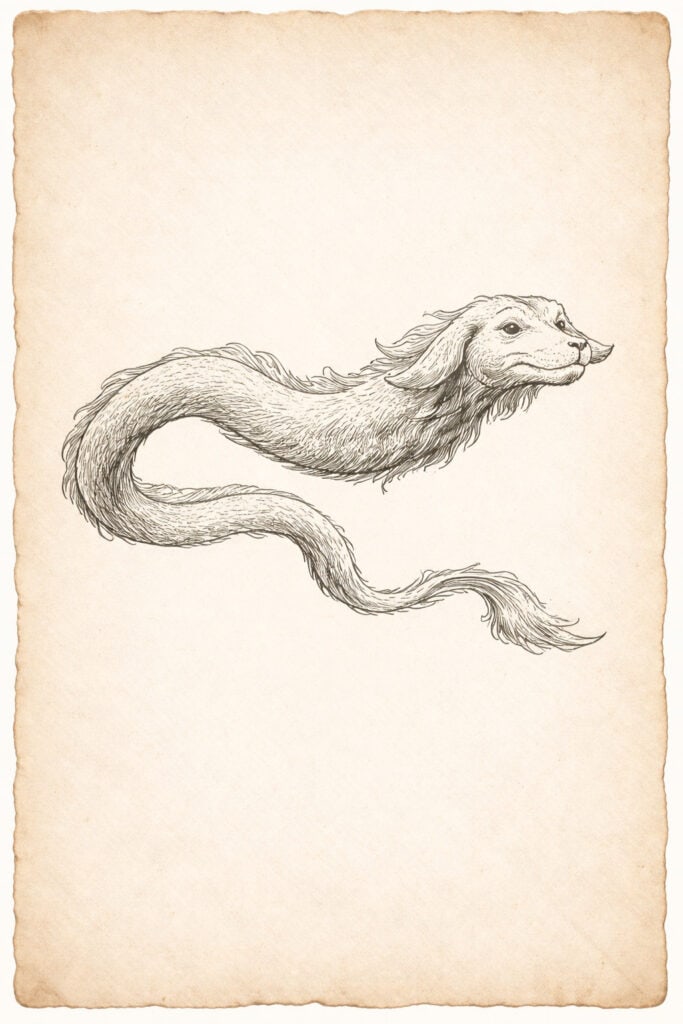
In The NeverEnding Story, the Luck Dragon, Falkor, offers an entirely different lens. He is gentle, wise, and protective. He carries the idea that not all dragons are destructive; some are companions in moments of uncertainty and change.
These contrasting portrayals echo something older in myth itself: dragons are never just one thing. They shift between fearsome and benevolent, destructive and guiding, depending on the story being told.
Ancient Texts & Literary Threads
Dragons also appear in ancient literary and religious texts, including references found in the Book of Daniel, such as the story often known as “Bel and the Dragon.”
In these narratives, the dragon is portrayed within a theological and symbolic framework, ultimately shown not as divine or worthy of worship, but as a created being within a larger moral and spiritual order. Daniel’s wisdom ultimately frees the empire from an ancient submission that was misplaced.
Whether read literally, symbolically, or historically, these passages reflect how deeply dragon imagery was embedded in early human storytelling and worldview.
Interpretive Field Notes (Personal Reflection)
In my own field notes as an artist, I often find myself wondering about the persistence of dragon imagery across cultures.
There is a recurring thought that appears in many artistic and folkloric traditions: that dragons may represent something once closer to lived experience than we now assume.
Some interpretations suggest connections between dragons and ancient encounters with large prehistoric creatures, later preserved and reshaped through storytelling. Others see dragons as symbolic memory, arising from humanity’s attempts to describe overwhelming natural forces, or the awe of encountering something beyond understanding.
These are not conclusions, but reflections, ways of noticing how deeply dragons are woven into the human imagination.
In my watercolor studies, I tend to lean into dragons as intelligent, ancient presences, beings that carry both awareness and weight, whether literal, symbolic, or somewhere in between.
What fascinates me most is not what they were…
but why we still remember them.
Artistic Interpretation
When I paint dragons, I don’t approach them as fantasy creatures alone.
I think of them as living symbols, embodiments of intensity, memory, and transformation.
They feel like stories that learned how to breathe.
Sometimes fire. Sometimes wind. Sometimes something far older than either.
Field Notes Classification
Mythic Beasts – Legendary beings from ancient stories and cultures
Dragons belong to the mythic beast category: beings rooted in global mythology, shaped by cultural memory, symbolism, and storytelling across civilizations.
Reflection
Some stories persist not because they are proven…
but because they continue to feel meaningful.
Dragons remain one of the clearest examples of this. They change form across cultures, yet they never disappear. They remain present wherever humans tell stories about power, wonder, and transformation.
And perhaps that is what makes them timeless.
Not their shape…
but their ability to stay alive in story.
Associated Artwork
(This entry will include my watercolor ACEO interpretation of a dragon as part of the Field Notes collection.)
Field Note Status
Ongoing mythic record. Dragons continue to appear across global folklore, literature, and artistic interpretation.
Related Field Notes
Other entries that echo similar patterns or observations:
- Phoenix – a legendary creature tied to fire, transformation, and ancient storytelling
- Loch Ness Monster – a possible reflection of how large unknown creatures are remembered
- Dryad – a contrast between creatures of power and those rooted in living nature
Further Reading & Field Resources
Dragon stories span cultures and centuries, appearing in both myth and recorded history.
As an Amazon Associate, I may earn from qualifying purchases.

Raeanna
Raeanna Tilly is a watercolor artist, writer, gardener, and storyteller cultivating a life of faith, beauty, and hope at the forest’s edge in North Carolina with her family. Through her art and words, she invites others to slow down, look a little closer, and discover that hope can take root in the most ordinary places.