The Art of Growing Tomatoes from Seed: A Step-by-Step Tutorial
Are you ready to embark on a journey of growing your own tomatoes? From the joy of nurturing tiny seeds to the satisfaction of harvesting ripe tomatoes, this guide will walk you through the process of growing tomatoes from seed to dinner and even storage. Let’s dive in!
I independently review every product I recommend. When you make a purchase through a link, I may earn a small commission at no additional cost to you. Learn more
Choosing the Right Tomato Varieties
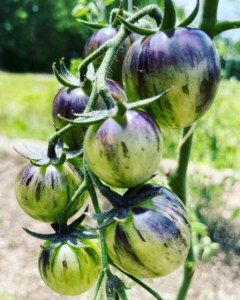
Before you start planting, it’s crucial to select the right tomato varieties for your garden. Consider factors like taste, size, disease resistance, and your local climate. Here are the varieties I am growing this season:
- Carbon: The fruit is large with deep red coloring. The flavor is complex and has won the “Heirloom Garden Show” in 2005.
- Cherokee Purple: Known for its excellent flavor which is dark and sweet.
- Black Cherry: A dark cherry tomato that is very sweet and perfect in salads!
- Black Strawberry: Such a fascinating tomato to behold. When you bite into them, they explode in your mouth! Very juicy!
This year’s theme is black/purple tomatoes. I chose my favorite from last year’s harvest and planted around 20 plants!
All four of the types of tomatoes I am growing this year are indeterminate, which means they will continue growing all season long. Because of this I chose to use a single string trellis system and will train a single vine to grow up each string.
If you intend on saving tomato seeds for the following season, heirloom varieties are the best because their seed will stay true to form. Hybrid varieties may not produce the same type of plant as their parent plant since it was created by cross-pollinating 2 different types of tomato plants.
For an extensive resource on tomato varieties, Rutgers is continuing to add details and photos to their Tomato Varieties database as they become available.
Starting Tomato Seeds
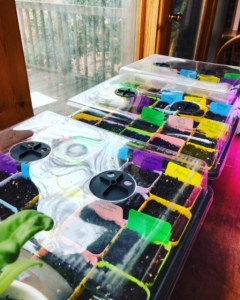
Begin by starting your tomato seeds indoors about 6-8 weeks before the last frost date in your area. Follow these steps for successful seed starting:
Fill seed trays with a seed-starting mix, moisten, and sow the tomato seeds according to the package instructions.
Place the trays in a warm location with ample sunlight or under grow lights if needed. I use my sunroom, but if you have a greenhouse that would be ideal.
Keep the soil moist, but not waterlogged, by misting it regularly.
I like to use seed starting trays that water from the bottom as they keep the soil moist without the worry of overwatering.
Once the seedlings have developed their first set of true leaves, transplant them into individual pots with nutrient-rich soil.
Hardening off Tomato Seedlings
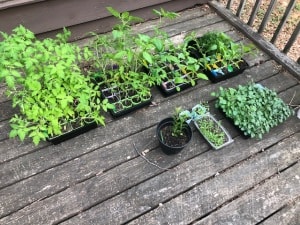
Seedlings need to be hardened off. What is hardening off? Hardening off seedlings means taking them outside for a limited time to get them accustomed to the environment.
Seedlings have it pretty good inside a structure. It’s kind of like being inside the house all winter and then going outside on a blazing summer day without sunscreen. Your skin will get burned.
Seedlings are still delicate and could get burned by the sun or damaged by the wind or cold. If they get damaged at this crucial time it could delay their growth or end their viability.
It’s best to give yourself 1-2 weeks to harden off before you intend to plant the seedlings in the garden.
What does a Hardening off schedule look like?
- Day 1: Set your seedlings outside in a place where they will get partial sunlight. 1-2 hours.
- Day 2: Set your seedlings outside for 2-3 hours.
- Day 3: Set them outside in a slightly sunnier place for 3-4 hours.
- Day 4: Set them outside in the same place for 4-5 hours.
- Day 5: Set the seedling in a sunny area 4-5 hours.
- Day 6: Continue to increase the amount of time left out.
- Day 7: If the tomato plants are responding well let them have an entire day outside.
This is a suggested schedule. Gardening is an art form and not a science, it is important to read your plants. If they are struggling limit their outdoor time and extend the days you intend to harden them off.
Transplanting Tomato Seedlings
When the danger of frost has passed (or in my case this year the danger of fire-ants) and your seedlings are around 6-8 inches tall, it’s time to transplant them into your garden. Follow these steps to ensure a successful transplant:
- Choose a sunny spot in your garden with well-drained soil.
- Prepare the soil by adding compost or organic matter to improve its fertility.
- Dig a hole for each seedling, ensuring it’s deep enough to bury most of the stem.
- When I say most of the stem, I mean as much of the stem as possible. The stem is capable of growing roots that will support the plant so dig deep and get that baby in there!
- Gently remove the seedling from its pot and place it in the hole.
- Fill the hole with soil, firm but gently, and water thoroughly.
Caring for Tomato Plants
Tomato plants require regular care and attention to thrive. Here are some essential tips for nurturing your tomato plants:
- Water the plants deeply and regularly, aiming to keep the soil consistently moist.
- For watering ideas check out 7 Ingenious Watering Solutions for Your Organic Edible Garden!
- Apply a layer of organic mulch around the plants to conserve moisture, suppress weeds, and regulate soil temperature.
- Stake or cage your tomato plants to support their growth and prevent branches from breaking under the weight of the fruit.
- For trellis ideas check out Creative Vertical Gardening Ideas to Maximize Your Small Space!
- I prefer growing indeterminate tomato types and using a string trellis system.
- Monitor your plants for any signs of pests or diseases, and take appropriate action to prevent damage. Companion Plants are a great deterrent to pests and animals. Organic Pest Control can be a great option as well.
- Decaying leaves should be removed to give space for decent air circulation.
- Fertilize your tomato plants with a balanced organic fertilizer, Espoma Tomato Tone “paid link” is a great choice that I have had success with. Follow the recommended dosage. Or use compost if you have seasoned compost available which is what we currently use. The article on Turning Compost into Garden Gold can help you get started composting if you are interested in learning about your composting options.
Harvesting and Storing Tomatoes
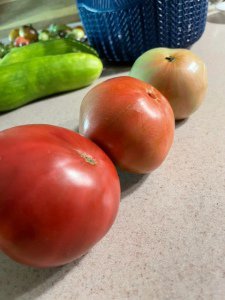
As your tomato plants mature, it’s time to reap the rewards of your efforts. Here’s how to harvest and store your tomatoes:
You could pick tomatoes when they are fully ripe and have reached their desired color.
A good strategy when pest pressure is at its peak is to pick the tomatoes once they begin to “blush”. Blushing is that hint of pink that shows up signaling the tomato has begun the ripening process.
Tomatoes are amazing, they will continue to ripen on the counter and taste just as sweet as when they are left on the vine.
Gently twist or cut the tomato from the vine, making sure not to damage the plant.
If you have an abundance of tomatoes, consider different storage options. You can store them at room temperature if you plan to consume them within a few days. If you choose to refrigerate them be aware that the taste and texture will be compromised. I don’t refrigerate mine, but that risk is your own choice.
For long-term storage, you can also preserve your tomatoes by canning, making sauces, or freezing them.
Following these steps, you can successfully grow tomatoes from seed and store them for future use. Enjoy the satisfaction of homegrown tomatoes that are packed with flavor and nutrients!
How to Save Seeds for Next Year’s Harvest: Protecting a Legacy
For more gardening information check out my Complete Guide to Edible Gardening!
Thank you for meeting me AT FORESTS EDGE. Where I am learning to grow food for my family and sharing my insights with you. I would love for you to join me on this journey, and subscribe to my newsletter where I share encouragement throughout the year as we GROW HOPE!
Until we meet again,
Raeanna

Raeanna
Raeanna Tilly is a watercolor artist, writer, gardener, and storyteller cultivating a life of faith, beauty, and hope at the forest’s edge in North Carolina with her family. Through her art and words, she invites others to slow down, look a little closer, and discover that hope can take root in the most ordinary places.